
Quick answer
Both Shadu Mati (natural clay) and Paper Lagda (paper mache) are genuinely eco-friendly because neither uses Plaster of Paris, plastics or chemical paints. Choose Shadu Mati for a small (under 12 inch) traditional home idol with a solid natural-clay feel and reusable garden soil after visarjan. Choose Paper Lagda for a medium or grand idol (12 to 60 inches), a high-rise apartment, or anything you need to carry far or ship abroad, because it is far lighter and more break-resistant in transit.
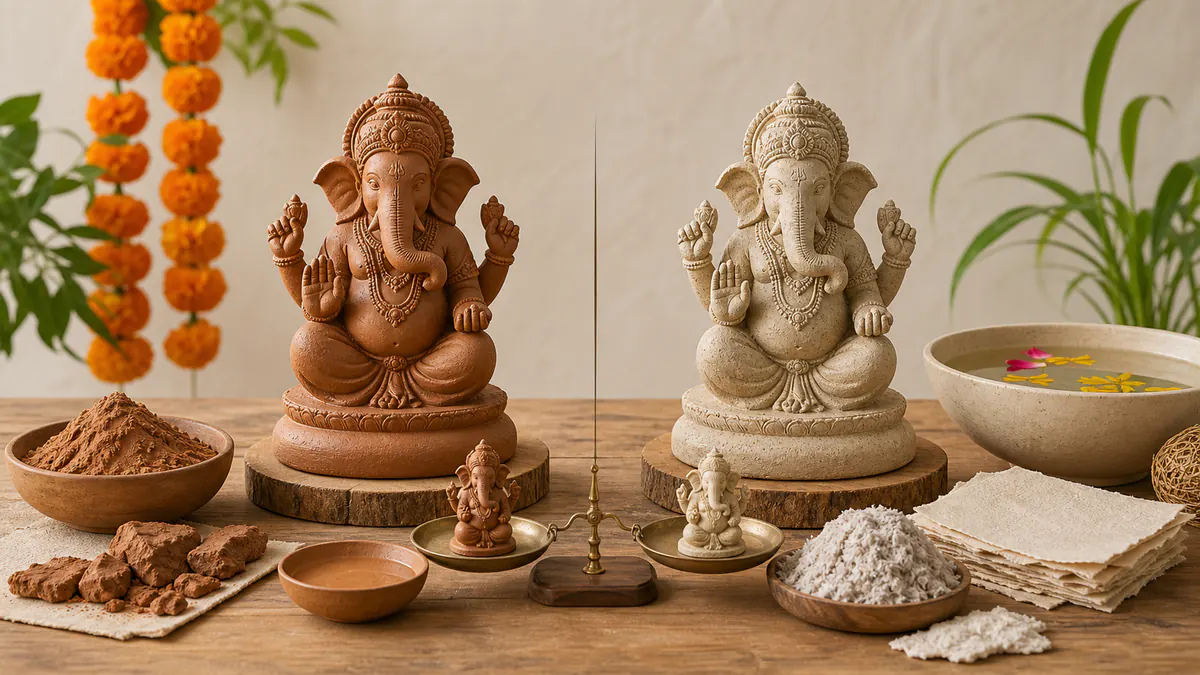
As demand for eco-friendly celebrations grows, Plaster of Paris (PoP) has rightly been rejected by conscious devotees. Two biodegradable materials have emerged as the main choices for home celebrations: Shadu Mati (traditional natural unbaked river clay) and Paper Lagda (upcycled organic paper mache). As makers who shape, dry and hand-paint both at our Mumbai and Alibaug workshops, we see the practical differences first-hand.
Both are respectful, eco-friendly choices, but they have very different physical characteristics. In this comparison we analyse their parameters side-by-side so you can choose the best fit for Bappa's sthapana. For more on safe immersion, see our guide to eco-friendly visarjan at home.
| Feature | Shadu Mati (Natural Clay) | Paper Lagda (Paper Mache) |
|---|---|---|
| Material | 100% natural unbaked river clay; no PoP, plastics or chemical paints | Upcycled paper pulp + vegetable (tapioca) starch binder; natural pigments |
| Weight | Heavy — dense clay | Much lighter (~80% lighter, per brochure) |
| Fragility | Fragile — can crack if knocked or vibrated | Far more break-resistant (flexible, shock-absorbent) |
| Visarjan behaviour | Soaks up water and settles back into natural clay silt | Softens and breaks down into clean organic paper pulp |
| Export & long-distance shipping | Higher risk of breakage in transit | Better suited — light and break-resistant |
| Visarjan Output | Rich natural clay silt (Soil) | Clean organic paper pulp |
Shadu Mati is a dense riverbed clay, which makes clay idols heavy — moving a medium idol up stairs or into a lift can take more than one adult. Paper Lagda uses low-density natural cellulose fibres and is roughly 80% lighter than equivalent clay (as per our brochure), so even children or senior citizens can carry a 2-foot Paper Lagda Ganesha with ease.
During festive transport, Mumbai roads are known for potholes and bumper-to-bumper traffic, and the continuous vibration is risky for Shadu clay, which can develop hairline cracks around Bappa's crown, trunk or hands. Paper Lagda is bound with organic tapioca starch, which makes the pulp flexible and shock-absorbent, so it is far more break-resistant and easier to handle in transit. It is not unbreakable, but it greatly reduces transport anxiety — one reason it is our recommended material for shipping and export.
Yes — and the reason is the materials, not marketing. Shadu Mati is 100% natural unbaked river clay, so during visarjan it soaks up water and settles back into harmless natural silt that you can return to your garden pots. Paper Lagda is upcycled organic paper pulp held together with vegetable (tapioca) starch and finished with natural pigments such as turmeric, red geru soil and multani mitti. Neither uses Plaster of Paris, plastics or chemical/oil paints, so both are made for safe home immersion. Learn more in our eco visarjan guide.
Both are made for safe home visarjan because neither uses Plaster of Paris (PoP), plastics or chemical paints. Shadu Mati is 100% natural unbaked river clay, so it soaks up water and settles back into harmless natural silt. Paper Lagda is upcycled paper pulp bound with vegetable (tapioca) starch and hand-painted with natural pigments, so it softens and breaks down into clean organic pulp. Use a bucket or drum at home rather than a water body for the cleanest result.
Paper Lagda is the better choice for export and long-distance shipping. It is far lighter than equivalent clay (around 80% lighter per our brochure) and, because the paper pulp is bound with flexible tapioca starch, it is markedly more break-resistant in transit than dense Shadu clay, which can develop hairline cracks from vibration. Devta Kala Kendra is a DPIIT-recognised, IEC-licensed exporter shipping to 16 countries.
Yes. Paper Lagda (paper mache) is made from upcycled organic newsprint and paper pulp bound with vegetable-starch (tapioca) glue, then hand-painted with natural pigments such as turmeric, red geru soil and multani mitti. It contains no Plaster of Paris, no plastics and no chemical or oil paints, so it dissolves into clean organic pulp during visarjan.
Paper Lagda is more durable during handling and transport because the tapioca-bound paper pulp is lightweight, flexible and shock-absorbent. Shadu Mati is dense and beautiful but more fragile, so it can develop hairline cracks around the crown, trunk or hands if knocked or vibrated. For a sturdy, easy-to-carry idol choose Paper Lagda; for a traditional solid-clay feel choose Shadu Mati and handle it gently.
For a small home idol (under 12 inches) Shadu Mati is the traditional pick: you get the solid natural-clay feel, and after visarjan the dissolved clay silt can be reused in your garden pots. Choose Paper Lagda instead for medium or grand idols (12 to 60 inches), high-rise apartments, or anything you need to ship.
Explore our Shadu Mati clay models and lighter, break-resistant Paper Lagda series in our filterable catalogue.
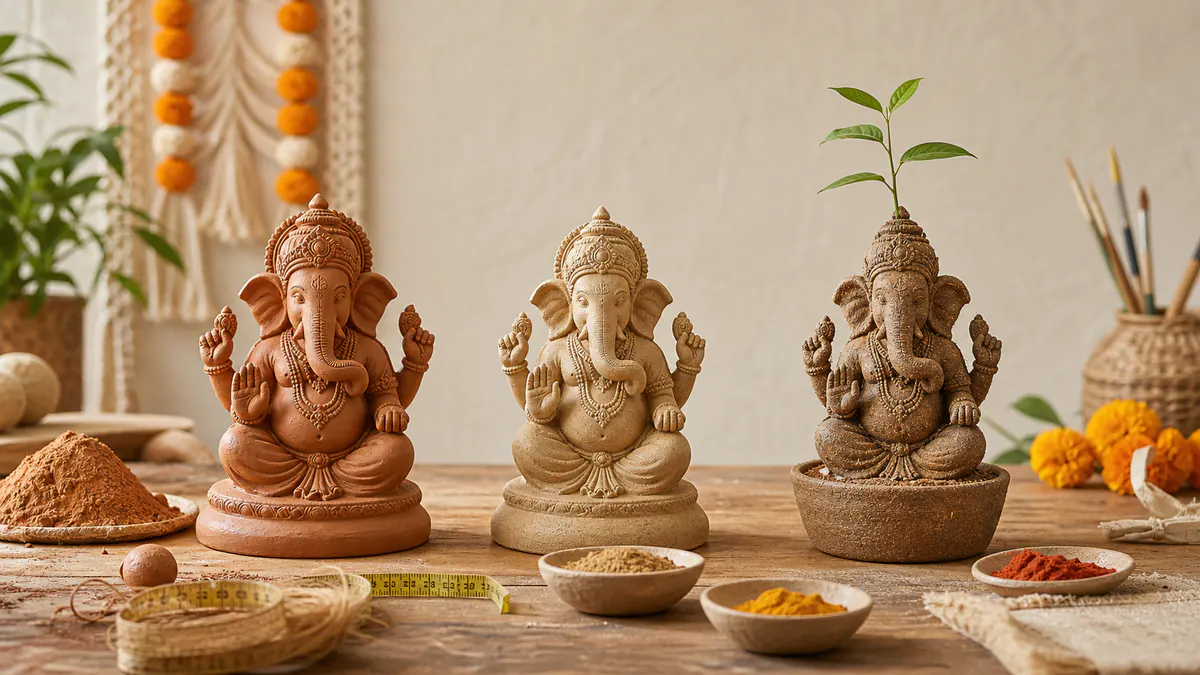
Size, material and weight compared, so you pick the right Bappa for your home.
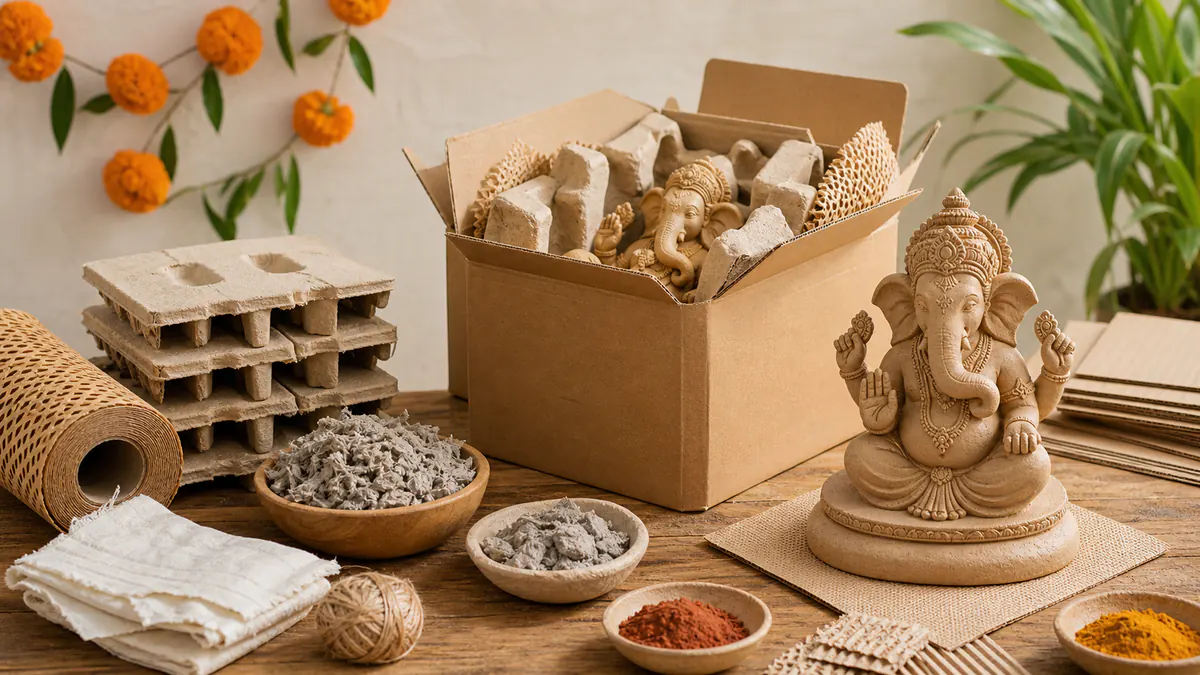
Lightweight, damage-resistant murtis for housing-society mandals and exports.
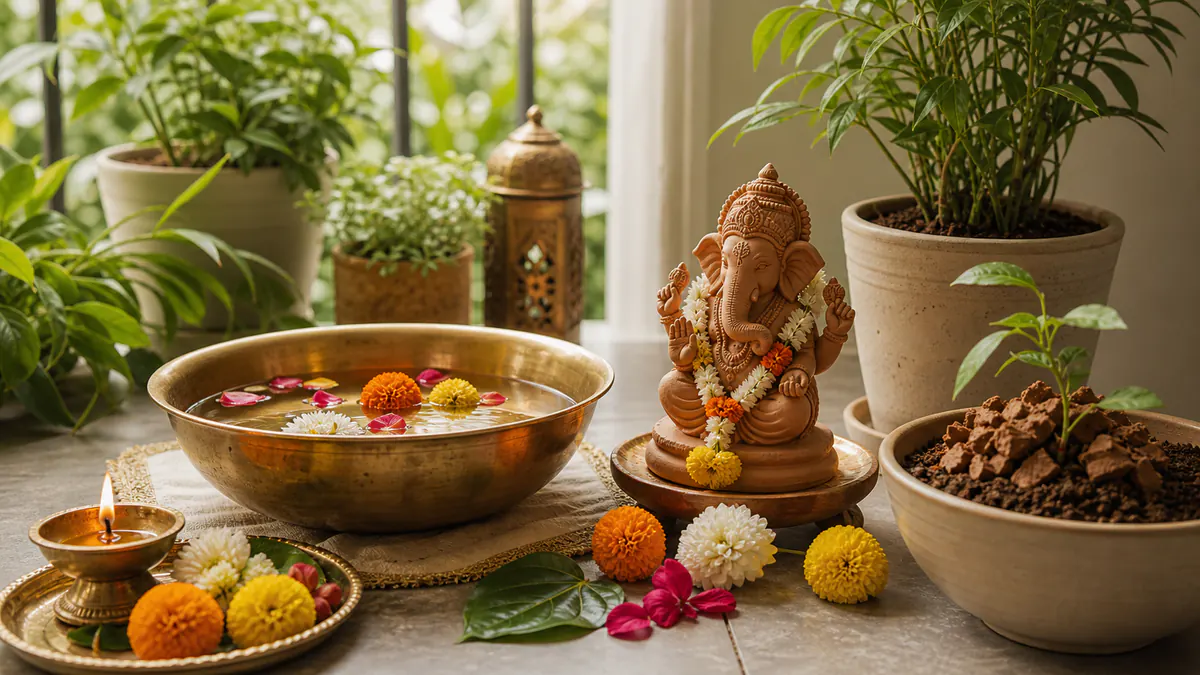
Immerse Bappa cleanly in a bucket at home, the respectful way.