
Devta makes eco-friendly Ganpati idols in four organic steps: we source and filter natural Shadu Mati river-silt clay and upcycled paper cellulose; master sculptors hand-mould each idol with no plaster of Paris and no polymer binders; the idols are slow shade-dried for 14–21 days instead of being baked in industrial ovens; and rural women artisans hand-paint them with food-grade natural pigments. No PoP, no plastics, no chemical or oil paints.
Step inside our registered workshops in Mumbai (Chembur and Sion) and our clay-craft unit in Alibaug, where local rural artisans earn a secure livelihood blending traditional sculpting with organic material science. Compare our two main materials on the Shadu Mati Ganpati and Paper Lagda Ganpati pages.
Process overseen by Er. Tushar Talari, Founder & CEO (engineer and product designer), Devta Kala Kendra Pvt. Ltd. · DPIIT Startup India recognised ·
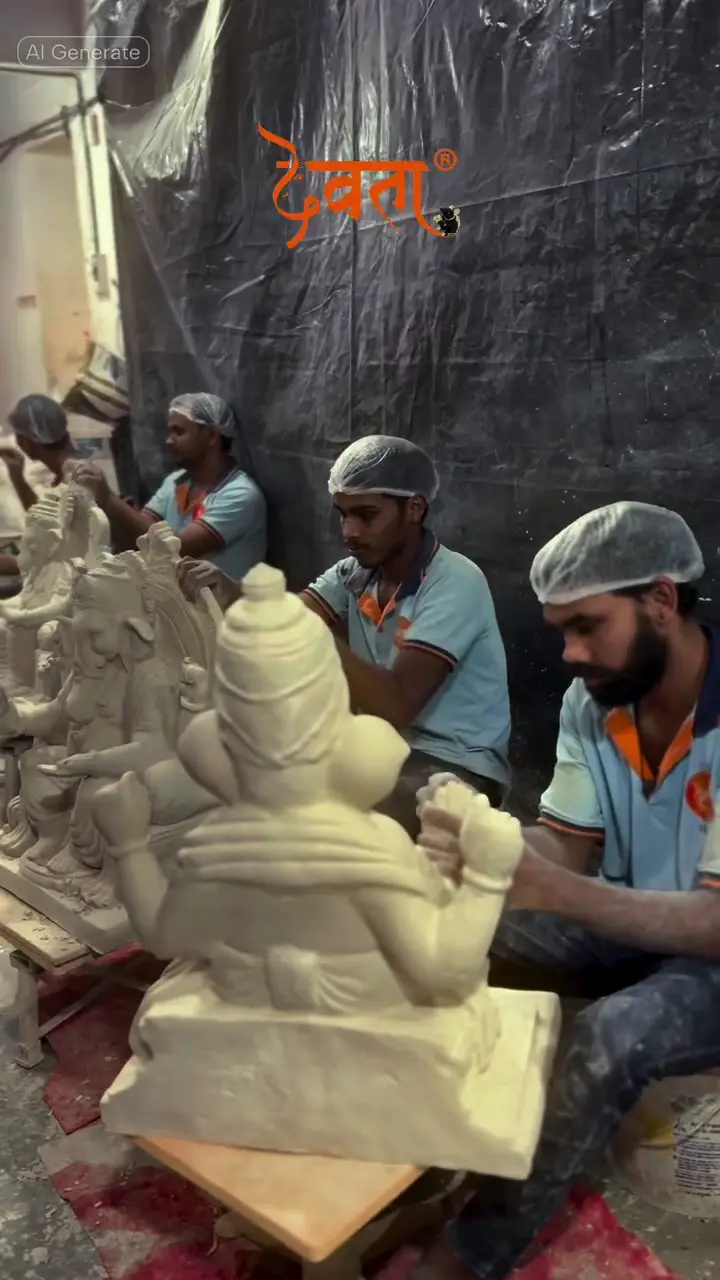 Made
MadeFrom holy soil to auspicious blessings — an inside look at our organic, plaster-free manufacturing process.
We source natural river silt (Shadu) and clean upcycled paper cellulose. The raw ingredients are filtered extensively to remove micro-pebbles.
Master clay sculptors mold Bappa's sacred shapes. No synthetic plaster molds or polymer binders are introduced during this sacred phase.
Rather than using industrial ovens which cause stress cracks, the molded idols are aged slowly under shaded verandas for 14-21 days.
Rural women artisans handpaint detailed garments using food-grade natural pigments derived from turmeric, red soil, and vegetable dyes.
Real photos from our Mumbai (Chembur, Sion) and Alibaug production floors — no stock photography, no AI renders.
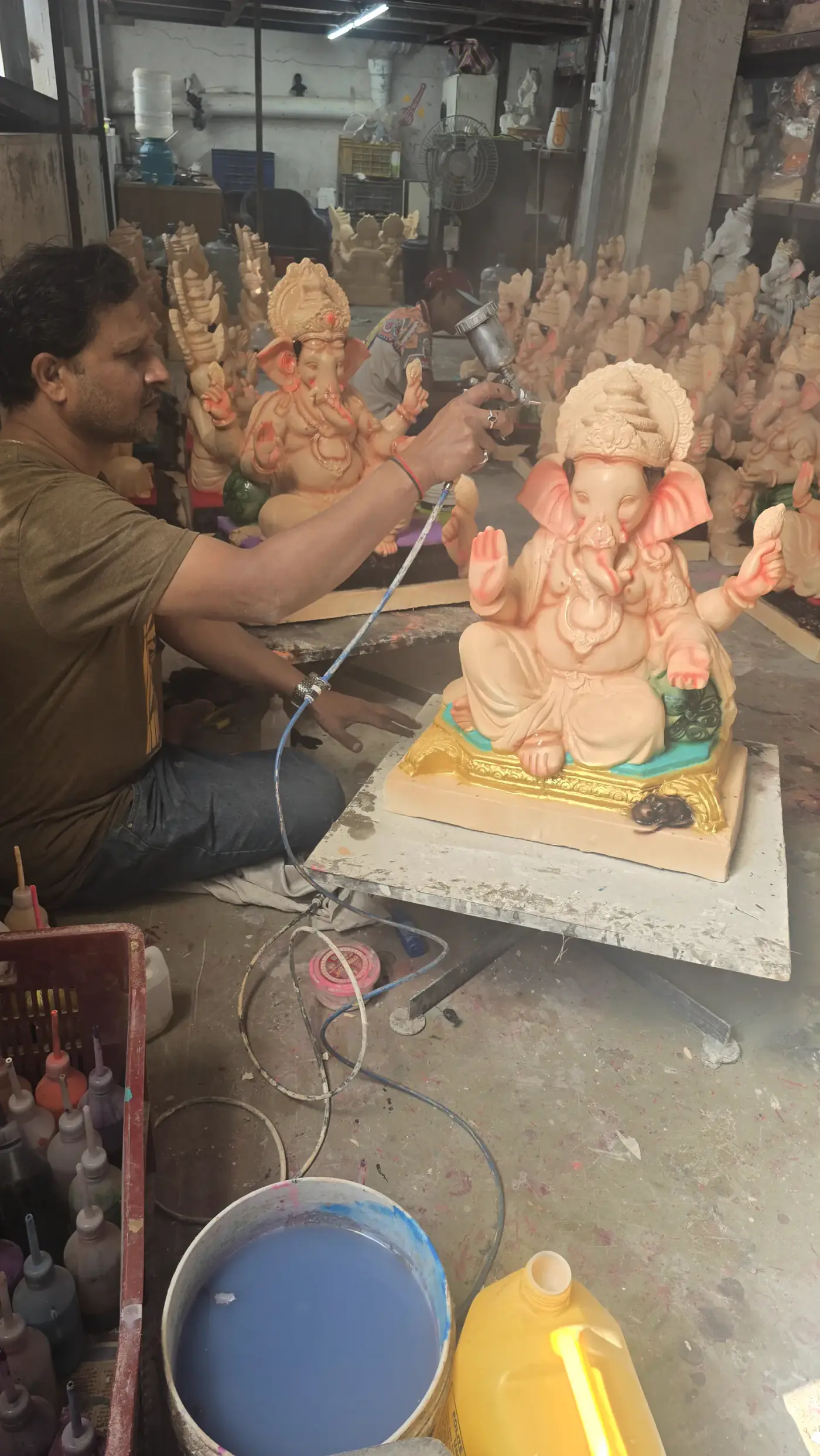
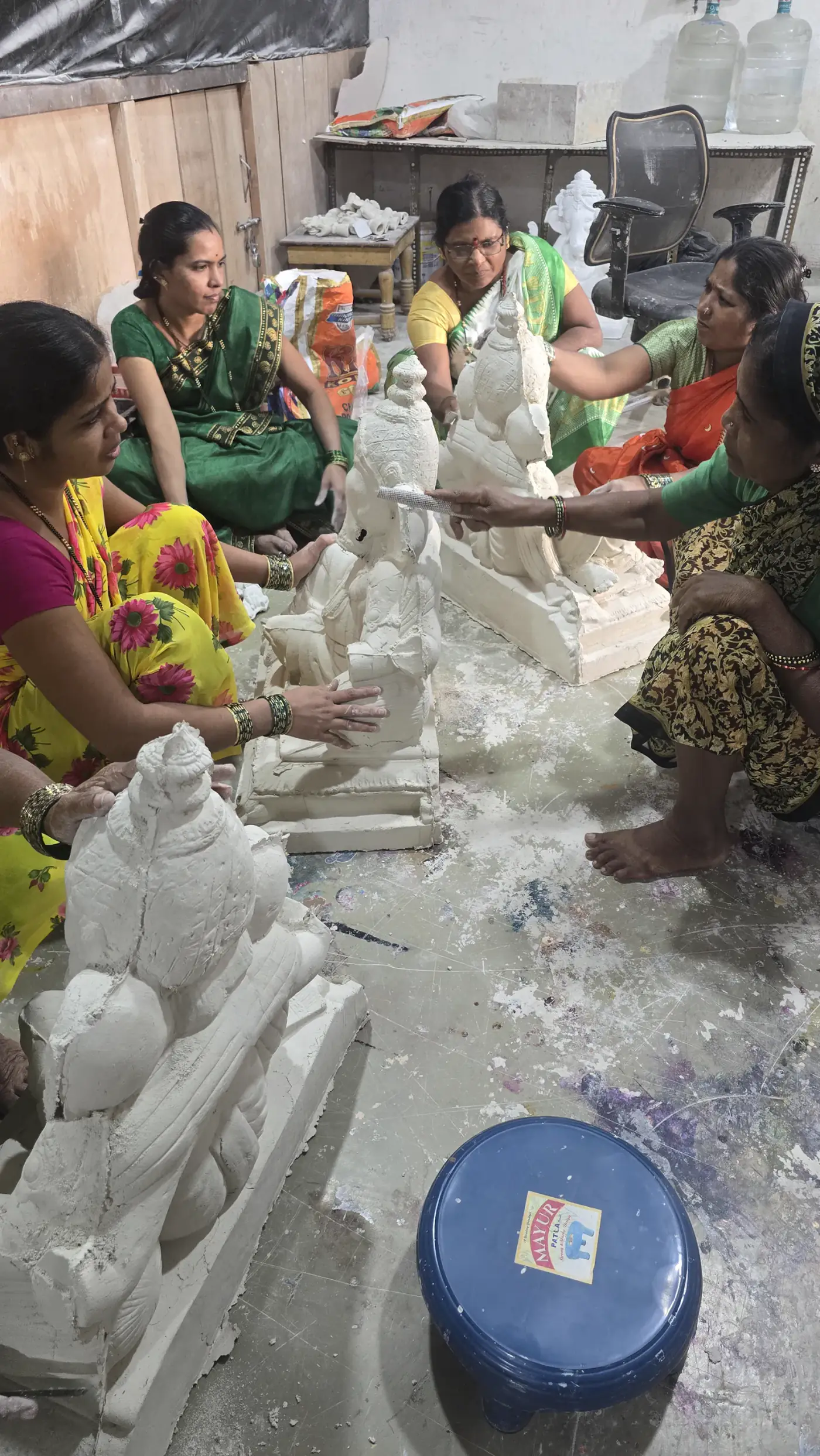
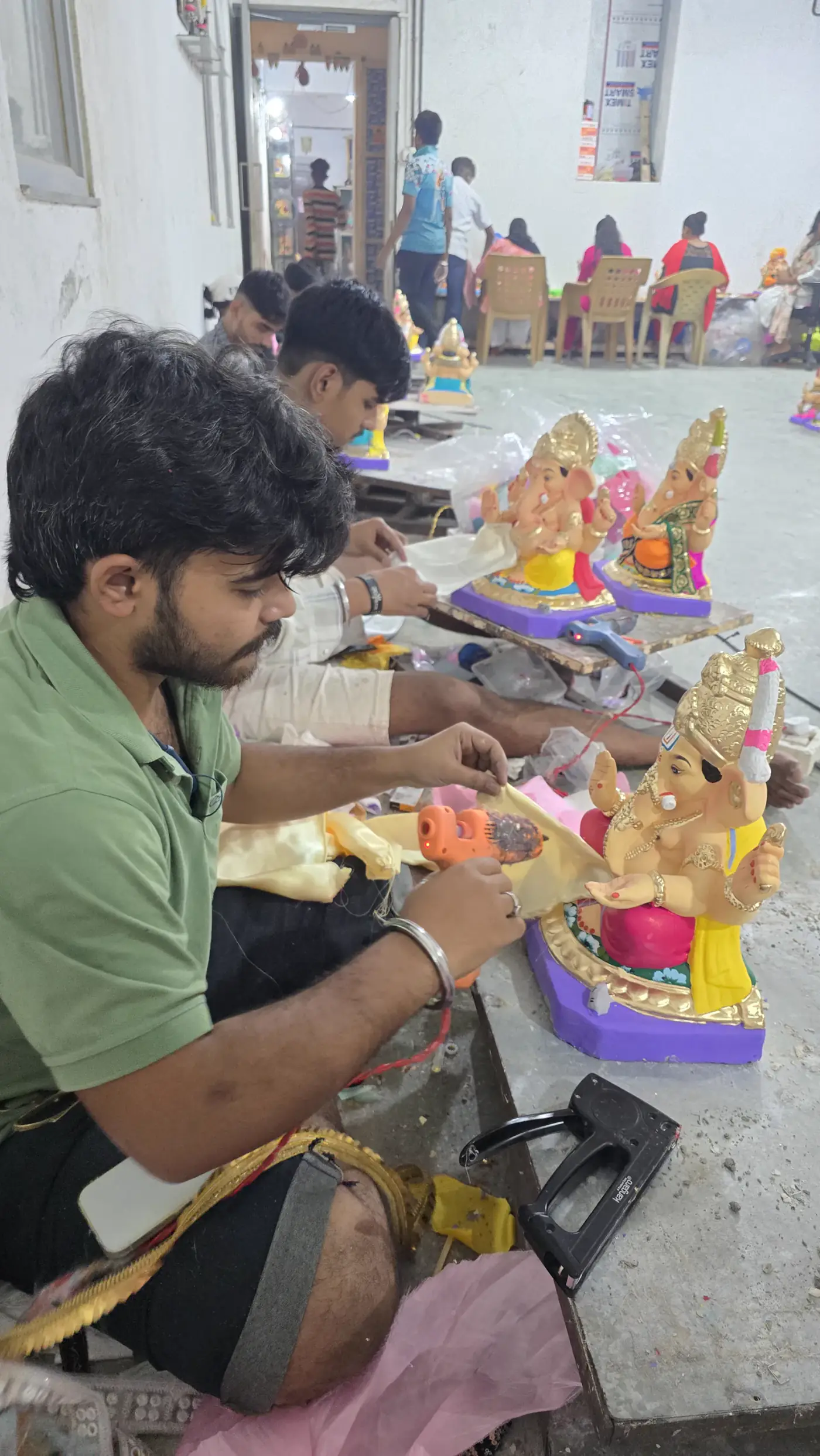
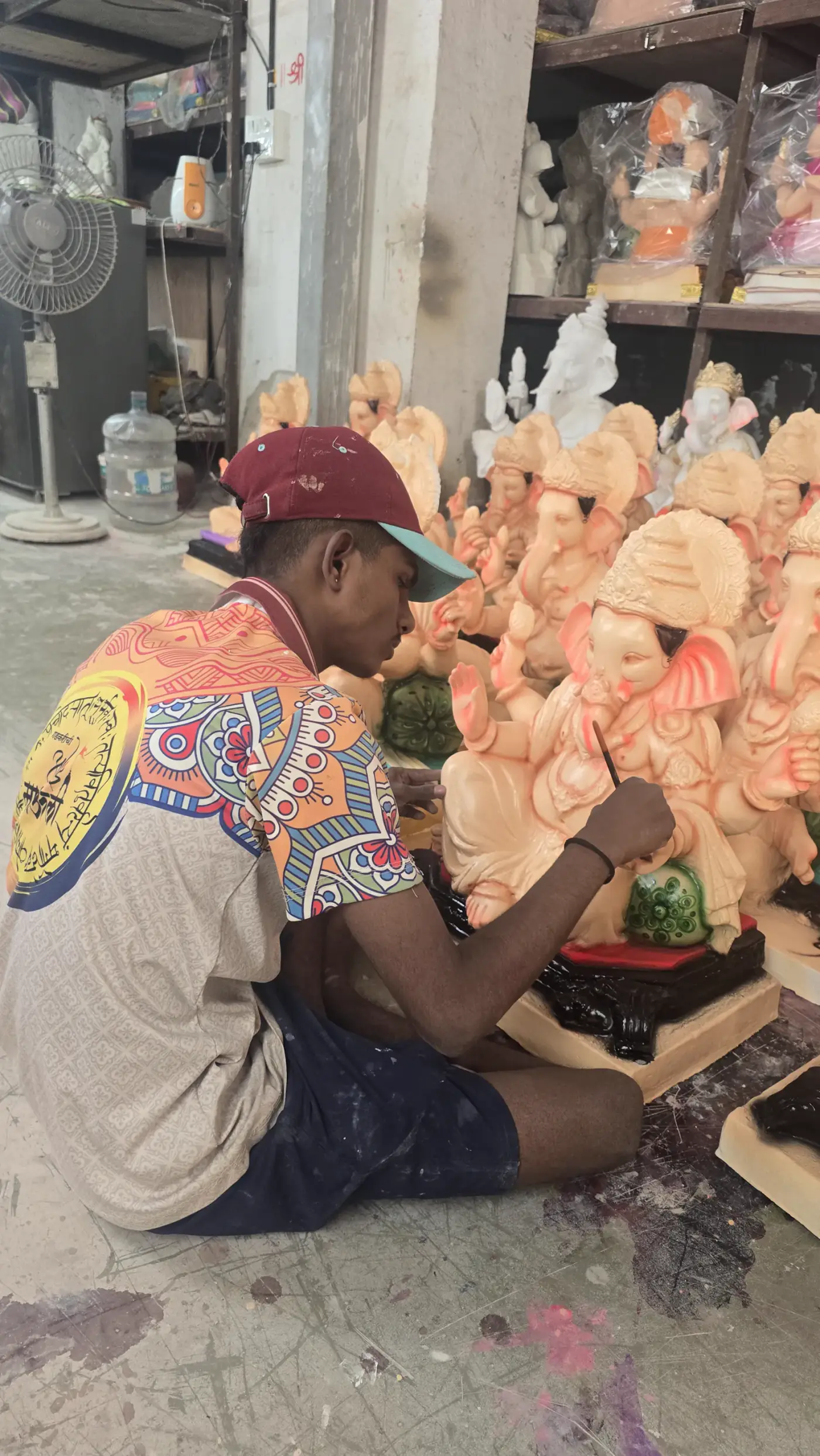
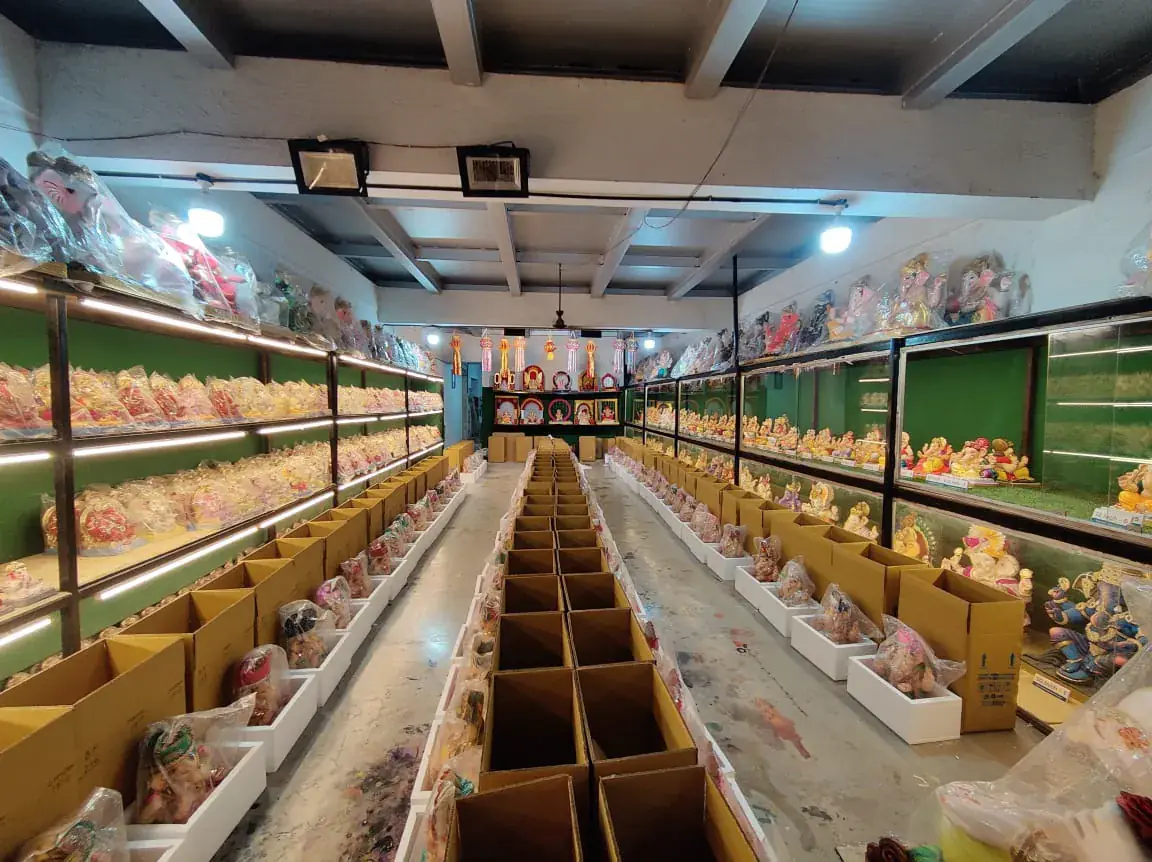
Short reels recorded from our active workshop floor across Mumbai & Alibaug. Tap any video to play.
Many mass-market Ganpati idols are coated with oil paints that can contain lead, cadmium and arsenic. Such oil paints repel water, which prevents plaster-of-Paris idols from dissolving during immersion, so they can persist in water bodies long after visarjan.
At Devta, we do not use oil or chemical paints at all. Every line, border and fold is hand-painted with water-soluble natural pigments bound with tapioca starch. Because the body is unbaked Shadu Mati clay with no PoP and the colours are food-grade and water-soluble — made without lead, cadmium or arsenic oil paints — the murti is designed to soften and dissolve in water during household eco-friendly visarjan.
Browse Fully Painted CollectionIndustrial production has heavily impacted traditional clay craft communities in Maharashtra. By scaling our operations to 15,000 square feet, Devta Kala Kendra Pvt. Ltd. provides secure, year-round employment to over 50 local rural sculptors and women artisans across Sion, Chembur, and Alibaug.
Every purchase you make directly supports these traditional artisan families, helping preserve a centuries-old cultural craft in Western India under official DPIIT Startup India certification.
Read Our Full Startup StoryWe do not use high-speed automated factory printing. Every Bappa face is individually sculpted and finished by a pair of human hands.
How our natural-material process differs from mass-market plaster-of-Paris idols.
Eco/safety statements above are tied to the stated materials: unbaked Shadu Mati clay, no PoP, and food-grade water-soluble natural pigments.
They are made in four organic steps: natural river-silt Shadu Mati clay and upcycled paper cellulose are sourced and filtered; master sculptors hand-mould the idol with no plaster of Paris or polymer binders; the idol is slow shade-dried for 14–21 days instead of being baked in industrial ovens; then rural women artisans hand-paint it with food-grade natural pigments.
Natural Shadu Mati (unbaked river-silt clay) and upcycled paper cellulose (Paper Lagda). No plaster of Paris, no plastics and no chemical or oil paints. Colours come from turmeric, red geru soil, multani mitti and charcoal, bound with water-soluble tapioca starch. See the Shadu Mati Ganpati page for more on the clay.
Because the idols are unbaked Shadu Mati clay and upcycled paper with no plaster of Paris, the clay dissolves in water rather than repelling it the way oil-painted PoP idols do. They are finished with water-soluble natural pigments instead of lead, cadmium or arsenic oil paints, so they are designed for household immersion. See our eco visarjan guide.
Each idol is slow shade-dried under shaded verandas for 14 to 21 days. We do not use industrial ovens, which cause stress cracks, so drying is gradual and natural.
Yes. We do not use oil or chemical paints. Every idol is hand-painted with food-grade natural pigments — turmeric (yellow), red geru terracotta soil (red), multani mitti base coats and charcoal extract for the eyes — bound with water-soluble tapioca starch, so the idols are made without the lead, cadmium and arsenic oil paints common on mass-market idols.
Yes. We operate registered workshop units in Mumbai (Chembur and Sion) and a clay-craft workshop in Alibaug, Raigad. You can request a workshop visit or message us on WhatsApp; we reply within 24 hours.