
Quick answer: To buy eco-friendly Ganpati murti wholesale, book your bulk order between April and June — this secures pre-monsoon production slots, because natural Shadu Mati clay and Paper Lagda idols are slow shade-dried for 14–21 days and cannot be rushed. Match material to buyer segment: Shadu Mati (Shadu clay & paper mache, from ₹3,501) for high-volume traditional buyers, Paper Lagda (pure paper mache, from ₹7,501) for lighter, easier-to-ship upscale and NRI stock, and Tree Ganesha plantable kits (on enquiry) for premium metro margins. Sizes run from 12 inch to 24 inch, and a genuine eco supplier should be able to prove no Plaster of Paris (PoP) and show DPIIT recognition.

Eco-friendly Ganesh idols have moved from a niche alternative toward a mainstream choice as more buyers look for greener options than Plaster of Paris (PoP). Retailers, seasonal workshop owners, and housing-society distributors increasingly need a reliable bulk source of genuinely eco materials — not idols falsely labelled "eco-friendly."
Running a successful seasonal Ganpati retail business comes down to a few decisions: choosing the right material mix for your margins, booking early enough to beat the monsoon and transport crunch, protecting stock in transit, and verifying that what you buy is genuinely eco. This B2B wholesale guide covers each, with specifics from how we produce idols at our Mumbai and Alibaug workshops.
It depends on the buyer segment you serve. Different eco-friendly materials attract different customer profiles and carry distinct handling and margin profiles, so your product mix should reflect that:
| Material | Typical size range | Weight & handling | Best buyer segment | Indicative retail "From" price |
|---|---|---|---|---|
| Shadu Mati (natural clay) | 12–15 in | Heavy, brittle — stack low, pack individually | High-volume traditional / home buyers | From ₹3,501 (12 in) |
| Shadu–Paper mix | 18 in | Mid-weight; clay with paper-pulp support | Mid-size society / mandal orders | From ₹5,501 (18 in) |
| Paper Lagda (paper mache) | 21–24 in | Light (~80% lighter than clay, brochure-stated); easy to ship tall idols | Upscale apartments, mandals, NRI/export | From ₹7,501 (21 in) |
| Tree Ganesha (plantable) | 9–12 in | Light; sold as seed + soil kit | Premium metro / eco-lifestyle buyers | On enquiry |
Prices are indicative "From" retail figures for Devta idols; the "~80% lighter" weight figure is a brochure claim. Custom and bespoke sizes are quoted on enquiry.
Ganesh idol manufacturing is a time-constrained, seasonal craft. Clay moulding, slow shade-drying, and natural hand-painting need precise atmospheric conditions, and idols must be dried before the heavy monsoon arrives. At Devta, each idol is shade-dried for 14–21 days with no industrial ovens — so production capacity, not demand, is the real constraint near the festival.
Retail golden rule: Secure bookings by April–June. Wholesalers who wait until July face higher transport rates, a narrower choice of designs, and tighter delivery windows. Booking early lets a producer reserve your production slots and schedule transport before networks get congested.
Moving a consignment of 100 to 500 idols across states needs careful transport management. Keep these three points in mind:
With rising greenwashing, buyers are right to be sceptical. Some vendors sell PoP idols labelled "eco-friendly." To build a reputable long-term brand, verify two things with your supplier:
Devta Kala Kendra produces eco idols at its Chembur (Mumbai) head-office unit and its Alibaug clay-craft workshop in Raigad, in sizes from 6 inch to 60 inch across Shadu Mati, Shadu-Paper, Paper Lagda and Tree Ganesha ranges. Our brochure records 21,000+ idols crafted cumulatively over 2021–2025. As a DPIIT-recognised startup and DGFT-licensed exporter (IEC AAJCD6094K) serving 16 export markets, we can support retailers, societies, mandals and overseas buyers. See our wholesale & export page for B2B terms, or message the B2B desk on WhatsApp below.
Book between April and June. Eco idols need precise atmospheric conditions to cure — natural clay and paper pulp are slow shade-dried (Devta dries idols for 14–21 days) before the monsoon. Booking before July secures pre-monsoon production slots, the widest design choice, and lower transport rates.
It depends on your buyer segment. Shadu Mati clay & paper mache (from ₹3,501) drives steady high-volume sales for traditional buyers. Paper Lagda (pure paper mache, from ₹7,501) is lighter to store and ship — the brochure states it is roughly 80% lighter than equivalent clay — and suits upscale and NRI buyers. Tree Ganesha plantable kits (on enquiry) command the highest per-unit retail margin in metro markets.
Ask for the exact material and verifiable credentials. A genuine eco idol is 100% natural Shadu Mati clay or upcycled Paper Lagda with no Plaster of Paris, no plastics, and food-grade natural pigments. Source from a DPIIT-recognised supplier (Devta was recognised on 28/06/2023) and ask to see a sample idol dissolve in water — PoP will not.
Devta produces idols from 6 inch to 60 inch across Shadu Mati, Shadu-Paper, Paper Lagda and Tree Ganesha ranges. Because each idol is shade-dried for 14–21 days, lead times are driven by drying and the seasonal window — book by April–June to guarantee delivery before Ganesh Chaturthi.
Yes. Devta is a DPIIT-recognised startup and DGFT-licensed exporter (Import Export Code AAJCD6094K) shipping to 16 countries listed in its export service area. Idols are produced at the Chembur head-office unit in Mumbai and the Alibaug clay-craft workshop in Raigad.
Source eco-friendly Ganpati idols in bulk from a DPIIT-recognised, DGFT-licensed exporter (IEC AAJCD6094K). Talk to our B2B & export desk about dealer pricing, sizes (6–60 in) and the April–June booking window.
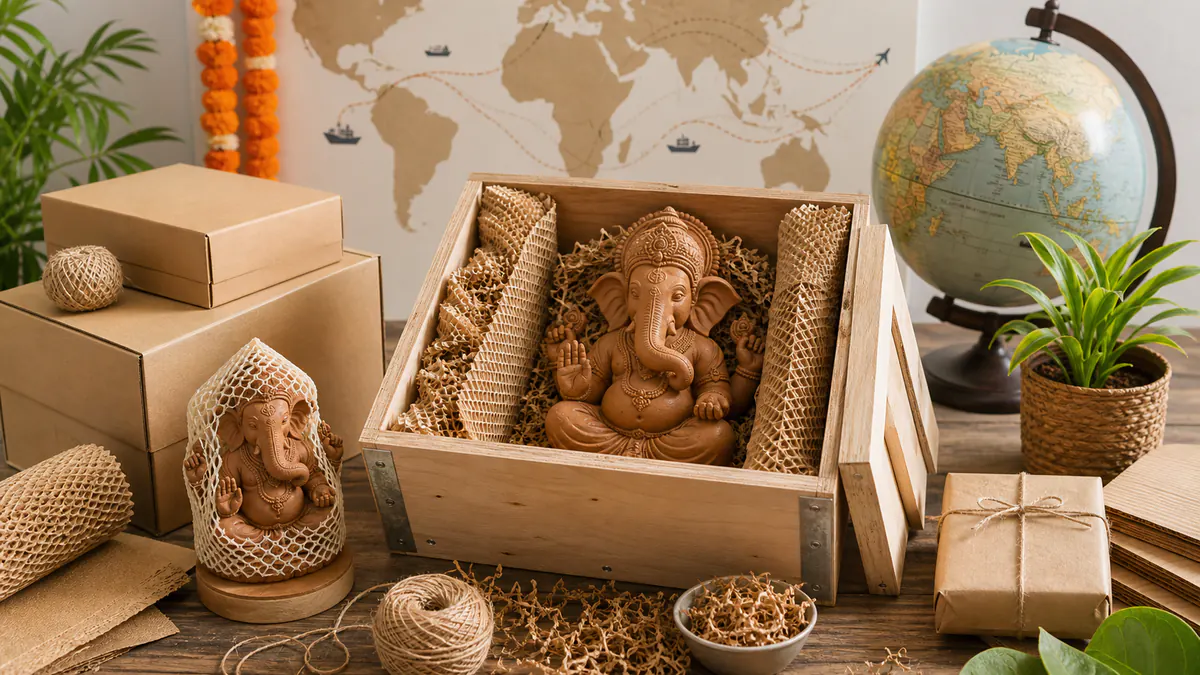
Licences, fumigated crating and air-vs-sea freight for B2B buyers.

Size, material and weight compared, so you pick the right Bappa for your home.
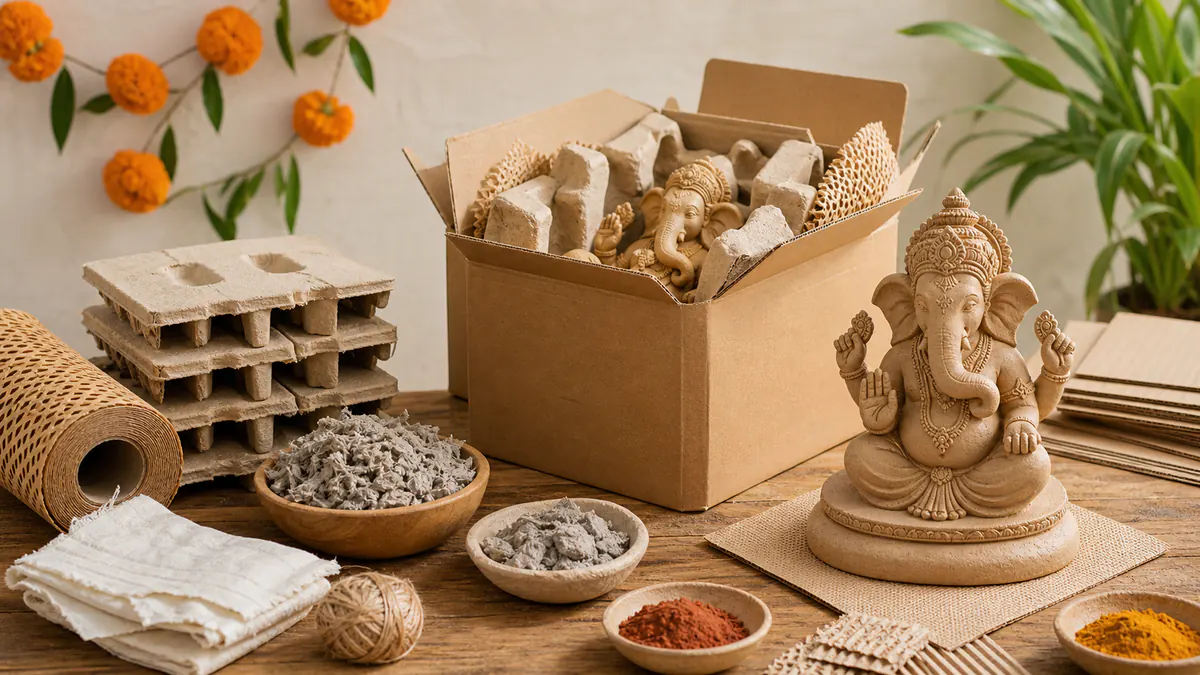
Lightweight, damage-resistant murtis for housing-society mandals and exports.