
Tushar Talari is an engineer and product designer who founded Devta Kala Kendra and runs its engineer-led, Talari-family eco-Ganpati workshop. Read more about our story and artisans.
Quick answer
To choose an eco-friendly Ganpati murti, match the material to your space and visarjan plan. For a small apartment, pick a lightweight Paper Lagda (paper mache) idol or a plantable Tree Ganesha. If you are a ritual purist with a garden, choose a 6–12 inch Shadu Mati clay idol. All three are biodegradable, free of Plaster of Paris (PoP), and made for home visarjan in a bucket, tub or flower pot. Before booking, confirm the idol uses water-soluble natural paints, not chemical or metallic ones.
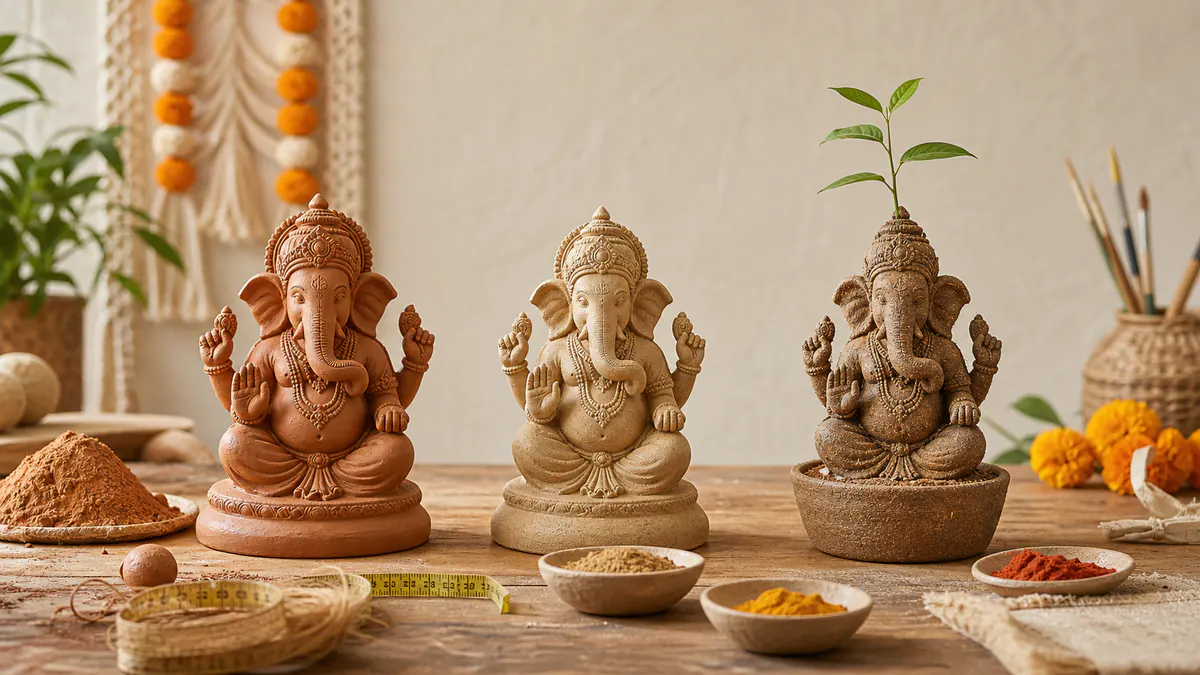
As Ganesh Chaturthi approaches, families and housing societies across Mumbai and the world begin preparing to welcome Bappa. In recent years, more devotees have moved to eco-friendly Ganpati murtis to protect water bodies and marine ecosystems from the chemical sludge left by Plaster of Paris idols.
With several options available, choosing the right idol can feel overwhelming. Should you pick Shadu Mati clay, upcycled Paper Lagda, or a plantable Tree Ganesha? This guide breaks down each option — by size, weight, visarjan method and price — so you can make an auspicious and environmentally responsible choice.
Each material suits a different home, budget and immersion plan. Use this comparison to narrow your choice at a glance, then read the detailed sections below.
| Material | Best size range | Weight | Visarjan method | Best for | From price |
|---|---|---|---|---|---|
| Shadu Mati clay | 12–18 in (indoor) | Heavier (solid natural clay) | Dissolves in a garden tub or bucket | Ritual purists with a garden | From ₹3,501 |
| Paper Lagda (paper mache) | 21–24 in | ~80% lighter than equivalent clay (brochure) | Softens to pulp in a water tub | Apartments, tall idols, export | From ₹7,501 |
| Tree Ganesha (plantable) | 9–12 in | Light to medium | Water poured in a pot; grows into a plant | Families who want a living memento | On enquiry |
Prices are indicative "from" figures and vary by size and finish; the current collection runs from 12 to 24 inches. The "~80% lighter" figure is from our product brochure.
The first step in choosing Bappa's idol is deciding where and how you will conduct the immersion (visarjan). Traditional beach immersion of Plaster of Paris (PoP) idols causes severe pollution, leaving chemical sludge that lingers for months. Eco-friendly idols offer a respectful alternative — home visarjan in a clean bucket, tub or flower pot. Match the idol to your space (see our step-by-step eco visarjan guide):
At Devta Kala Kendra, idols are hand-molded from natural materials with no synthetic plaster or polymer binders, then slow shade-dried for 14–21 days rather than oven-baked. Here is how the main materials compare.
Our Paper Lagda idols are made from upcycled paper pulp bound with vegetable-starch glue rather than chemical binders. Because there is no PoP, they are around 80% lighter than an equivalent clay idol (figure from our product brochure), which makes tall idols easy to lift, transport and export. They are well suited to larger sizes — our pure paper mache idols come in 21- and 24-inch sizes, with grand custom mandap idols on request — and they soften into a soft pulp in a water tub during immersion (our brochure cites roughly two hours).
Sourced from riverbeds and Konkan clay, Shadu Mati is 100% natural, unbaked clay — the classic choice for ritual purists. It holds detailed sculpting and intricate lines beautifully. Because solid clay is heavier and can chip if knocked, we recommend Shadu Mati for small indoor idols (6 to 12 inches) handled with care during sthapana. With no PoP and no polymer binders, it dissolves in plain water and the soil can go straight back to your garden.
Crafted from red soil, organic compost and cow dung with vegetable or herb seeds (such as tulsi, marigold, ladyfinger or tomato) embedded inside, our Tree Ganesha turns visarjan into new life. During home visarjan you pour water over Bappa in a large flower pot, and over the following days the seeds sprout into a living plant.
Be careful: many seasonal sellers call their clay idols "eco-friendly" but finish them with chemical or lead-based metallic paints. Those pigments can wash into your home immersion water, which then is not something you want to pour onto garden soil.
Ask your maker which pigments and binder they use. Our idols are hand-painted by rural women artisans using water-soluble natural pigments — turmeric (haldi) for yellow, red geru/terracotta soil for red, multani mitti (fuller's earth) for base coats and charcoal extract for the eyes — bound with tapioca starch instead of chemical or oil paints. We share the material details for any model during enquiry; you can also see the process on our manufacturing page.
For a balcony or small flat, choose a lightweight Paper Lagda (paper mache) idol or a plantable Tree Ganesha. Both are easy to lift, suit home visarjan in a bucket or flower pot, and need no beach trip. If you have a garden and prefer a traditional ritual feel, a 6–12 inch Shadu Mati clay idol is the classic choice.
Yes. Shadu Mati is 100% natural unbaked clay with no Plaster of Paris (PoP) and no synthetic polymer binders, so it softens and dissolves in plain water and the soil can go back to your garden. Safety depends on the paint too — confirm the idol uses water-soluble natural pigments rather than chemical or oil-based metallic paints.
It depends on the material and size. Because our idols are made from unbaked Shadu Mati clay or paper pulp with no PoP, they break down in water rather than hardening. Our brochure cites roughly two hours for a Paper Lagda idol to soften into pulp in a water tub; natural clay dissolves more gradually when stirred. Ask us for the expected time for your specific size before you book.
Our idols are hand-painted with water-soluble natural pigments — turmeric (haldi) for yellow, red geru/terracotta soil for red, multani mitti (fuller's earth) for base coats and charcoal extract for the eyes — bound with tapioca starch instead of chemical or lead-based metallic paints. We share the material details for any model during enquiry.
Choose Shadu Mati clay for a traditional, detailed idol if you have a garden for immersion (best at 6–12 inches). Choose Paper Lagda if you want a large but light idol (around 80% lighter than equivalent clay, per our brochure) for apartments and export. Choose Tree Ganesha if you want the idol to grow into a plant after visarjan. All three are biodegradable and made for home immersion.
Bringing Bappa home is a joyful moment for every family. By choosing a biodegradable Ganpati murti — Shadu Mati, Paper Lagda or Tree Ganesha — made without PoP and finished with natural water-soluble paints, you ensure your celebration protects water bodies and the Maharashtrian coastline.
Ready to book? Explore our full collection in sizes from 12 to 24 inches, or message us on WhatsApp to reserve your eco-friendly Ganesha for this season.
Explore our lightweight Paper Lagda and classic Shadu clay models in sizes from 12 to 24 inches.
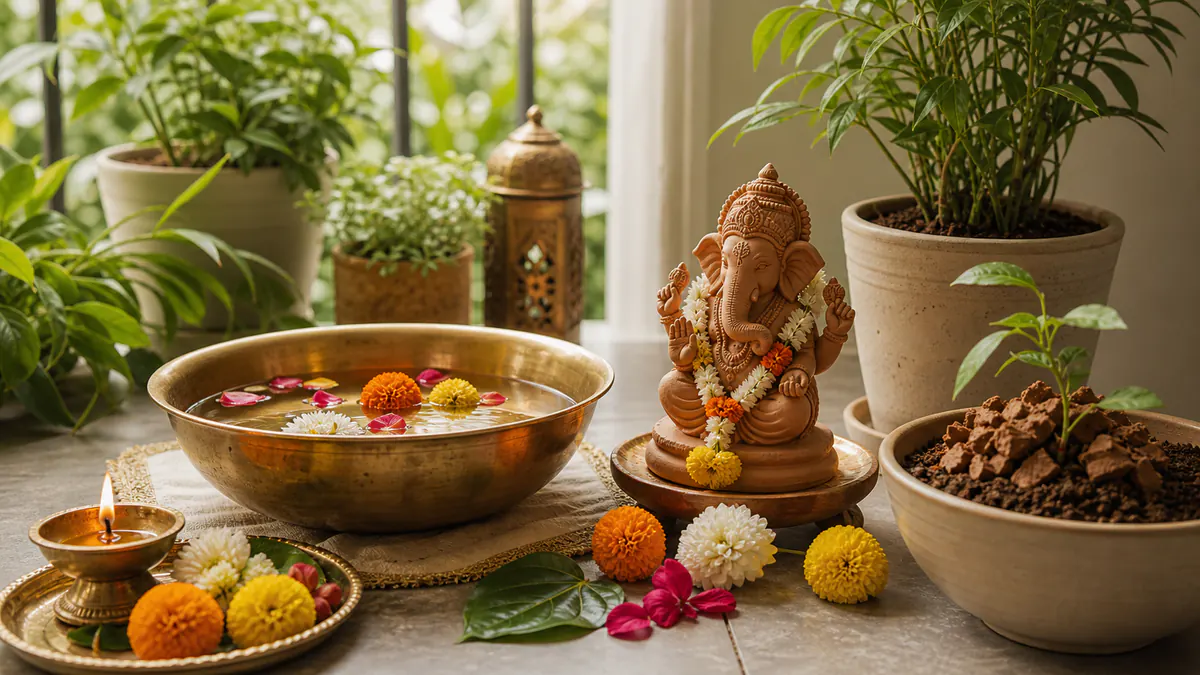
Immerse Bappa cleanly in a bucket at home, the respectful way.
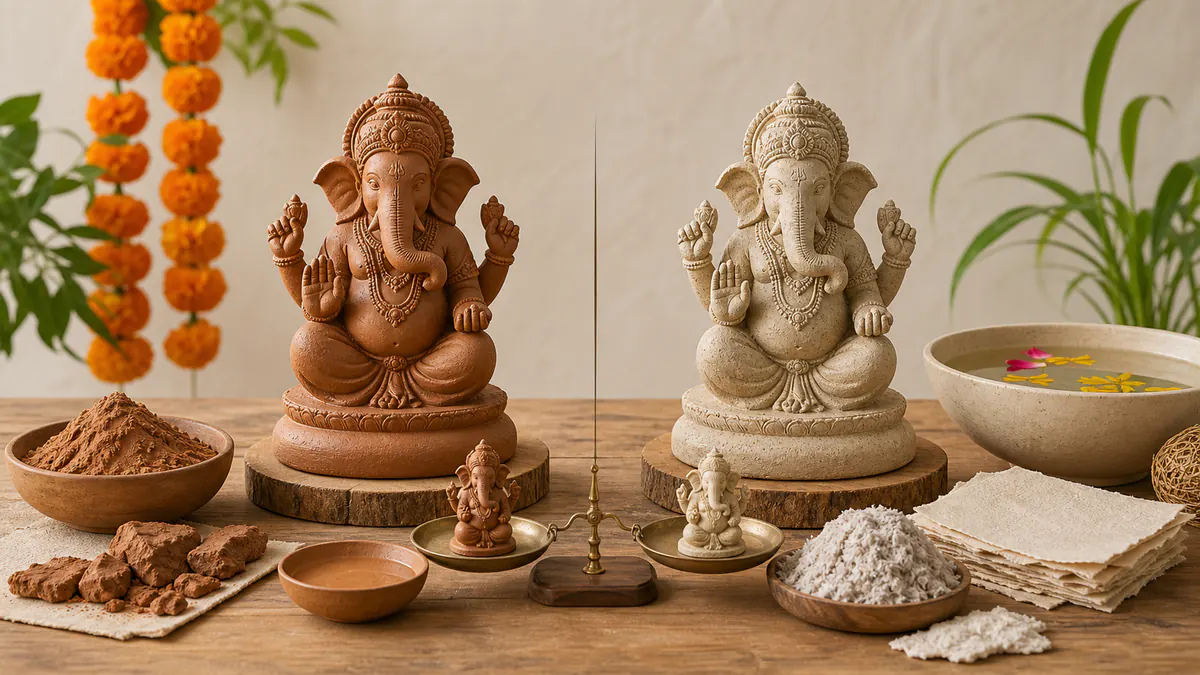
An honest comparison of weight, cost and how fast each dissolves.
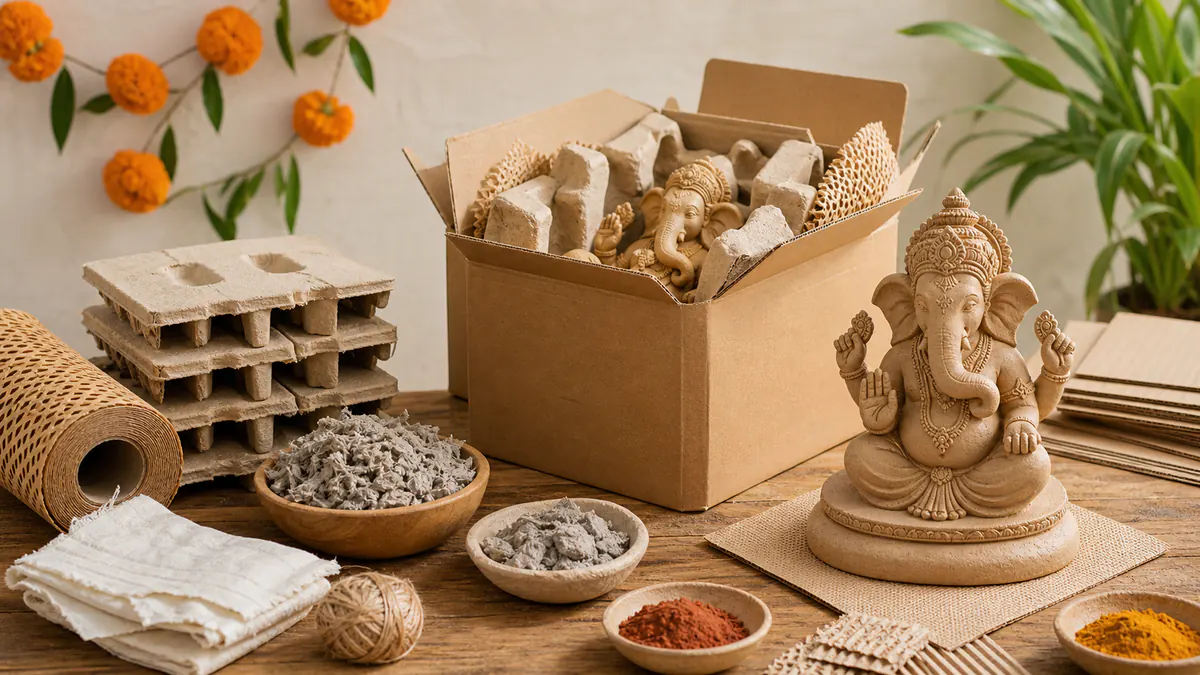
Lightweight, damage-resistant murtis for housing-society mandals and exports.