
Quick answer: To do an eco-friendly Ganpati visarjan at home, fill a clean bucket, tub, or large clay pot with fresh water deep enough to cover the idol. Perform the Uttar Puja and final aarti, then gently immerse a Shadu Mati (natural clay) or Paper Lagda (upcycled paper pulp) idol — these have no Plaster of Paris, so they soften and dissolve in the water. Once dissolved, pour the clay-rich water into your plants, garden, or tree basins — never into the drain.
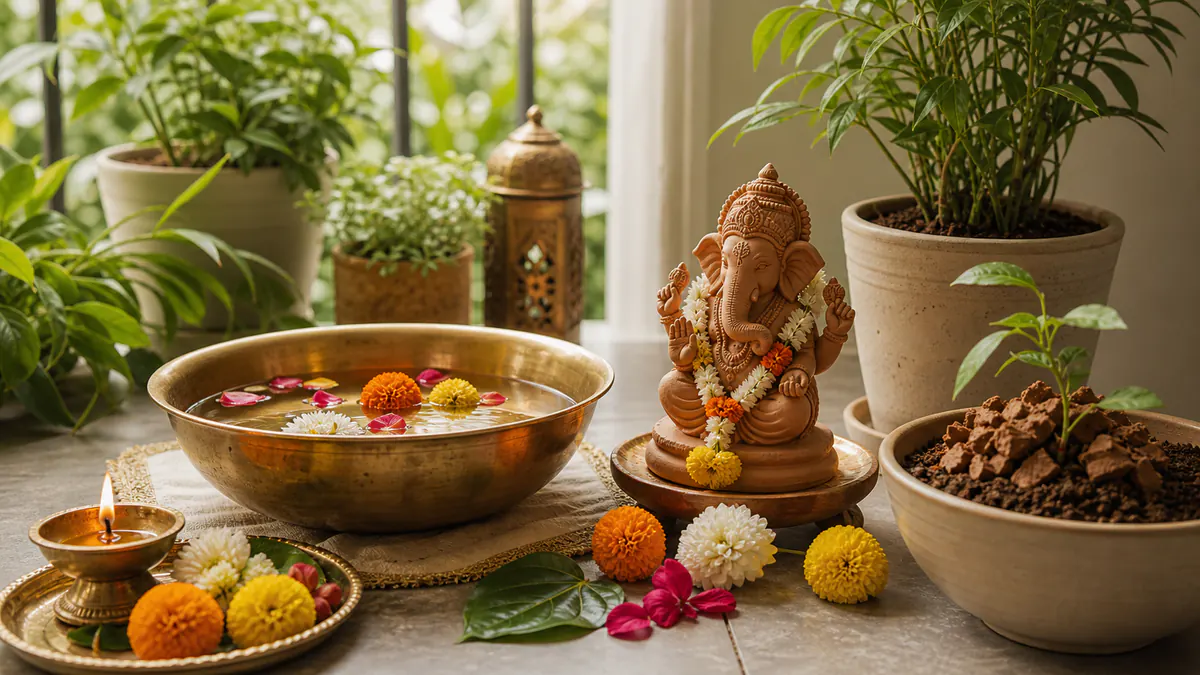
Ganpati Bappa Morya! Mangal Murti Morya! Visarjan is the final emotional chapter of our festive prayers, signifying Bappa's return to His heavenly abode of Mount Kailash, taking all our household obstacles along with Him. However, when traditional Plaster of Paris (PoP) idols are immersed in natural sea beaches, they do not dissolve. They wash back ashore in fragmented states, polluting water bodies and breaking devotees' spiritual sentiments.
A home bucket visarjan is a peaceful, respectful alternative. Using a biodegradable Shadu Mati or Paper Lagda Devta Ganpati murti, you can complete this sacred ritual right inside your home or balcony. Here is the step-by-step spiritual and practical guide to conducting it safely and cleanly. For the wider eco rationale, see our eco visarjan guide.
Choose a clean domestic bucket, tub, or large clay flowerpot. Fill it with clean fresh water. Make sure that the size of the bucket is large enough to fully submerge the entire height of Bappa's idol. Add a few drops of sacred Ganga water, fresh rose petals, and a pinch of turmeric to sanctify the water.
Gather your entire family together. Offer Bappa His final flowers, fresh Durva grass, and delicious modak sweets. Light a camphor diya, ring bells, and chant Bappa's final auspicious aarti with devotion. Pray to Bappa to bless your home with health, wisdom, and green environment, and ask for forgiveness for any unintentional mistakes during His stay.
"Chant: Ganpati Bappa Morya, Pudhchya Varshi Lavkar Ya!" (Bappa, please return early next year!)
Gently lift Bappa's lightweight Paper Lagda or Shadu Mati clay idol and lower Him slowly into the filled water tub with respect, ensuring He is fully submerged. Devta idols are made from unbaked natural Shadu clay or upcycled paper pulp held together with a natural vegetable-starch glue — with no Plaster of Paris and no chemical or oil paints — so they soften in plain water instead of staying intact like PoP. A small to mid-size idol breaks down quickly; the brand's brochure cites roughly two hours for its Paper Lagda idols, while larger idols take longer, so leave the bucket undisturbed until the idol has fully settled.
Once dissolved completely, you will be left with clay-rich water and clean organic soil or paper pulp. Pour this water directly into your balcony flowerpots, home garden plants, or tree basins. Avoid pouring it into standard washrooms or municipal drains. By returning Bappa to nature, you complete the cycle of life cleanly and responsibly!
The whole reason a home bucket visarjan is possible comes down to the material. Plaster of Paris does not dissolve in water; natural clay and paper pulp do.
| Factor | Shadu Mati / Paper Lagda (eco) | Plaster of Paris (PoP) |
|---|---|---|
| Material | Unbaked natural clay or upcycled paper pulp with vegetable-starch binder | Gypsum plaster; non-biodegradable |
| Dissolves in a home bucket? | Yes — softens and breaks down in fresh water | No — stays intact, does not dissolve |
| Paint / finish | Natural pigments (turmeric, geru, multani mitti); no chemical or oil paints | Commonly chemical/oil-based paints |
| River / sea impact | Returns to soil; water can feed plants | Washes back ashore in fragments; pollutes water bodies |
| Home immersion suitability | Suitable — designed for bucket visarjan | Unsuitable — residue cannot be returned to plants |
For a fuller breakdown of the two eco materials, see our Shadu Mati vs Paper Lagda comparison.
It depends on the material and size. A small to mid-size Shadu Mati or Paper Lagda idol softens and breaks down in a bucket of fresh water; the brand's brochure cites roughly two hours for its Paper Lagda idols. Larger idols take longer, so leave the bucket undisturbed until the idol has fully settled into slurry.
No. Pour the dissolved clay slurry into balcony flowerpots, garden beds, or tree basins instead of a washroom or municipal drain. The clay and natural pigments are soil-friendly and nourish plants, whereas the drain simply pushes the silt into the same water bodies you are trying to protect.
Yes. A home immersion follows the same ritual sequence — Uttar Puja, final aarti with flowers, durva, and modak, and immersion in water — as a river or sea visarjan. Performing it in a clean bucket at home preserves the devotional intent while keeping rivers and beaches clean.
Use the clay-rich water to feed plants in your home garden or balcony pots. With a Tree Ganesha, the soil already contains embedded seeds, so the leftover material can be planted to grow tulsi, marigold, or vegetables.
Plaster of Paris does not break down in water. PoP idols stay intact, sink, or wash back ashore in fragments and pollute water bodies. Eco-friendly idols made of Shadu Mati (unbaked natural clay) or Paper Lagda (upcycled paper pulp with vegetable-starch binder) are water-soluble, which is what makes a clean home bucket visarjan possible.
Watch real, self-recorded customer videos of families successfully performing domestic bucket visarjan.
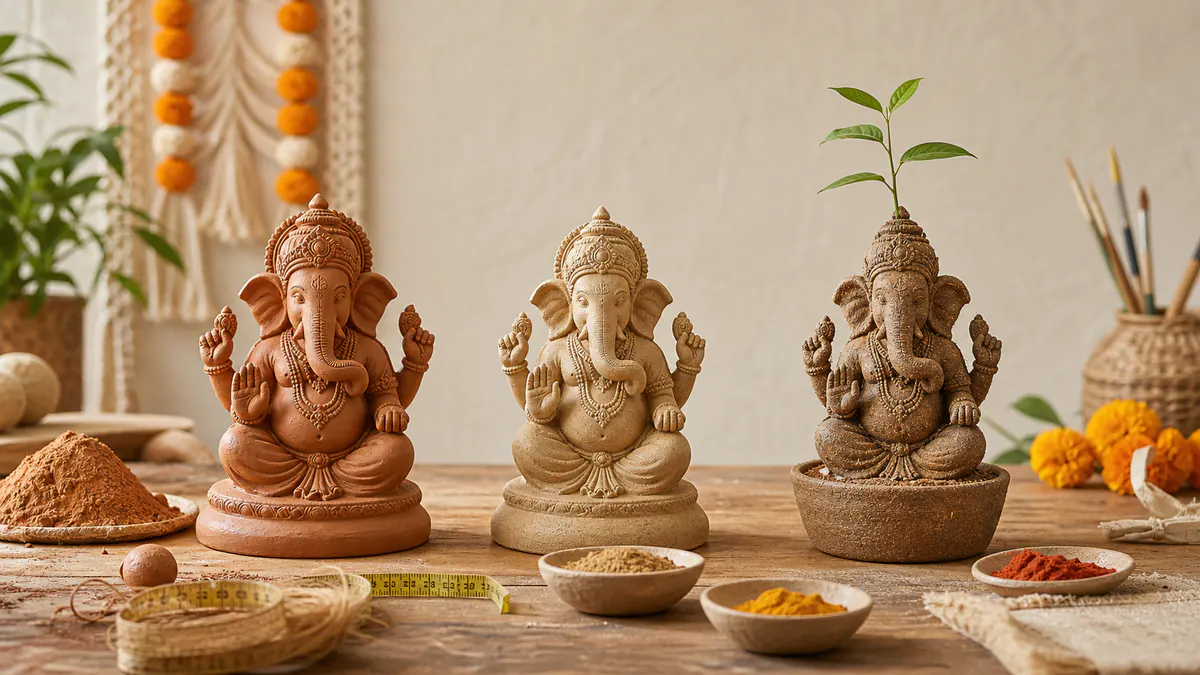
Size, material and weight compared, so you pick the right Bappa for your home.
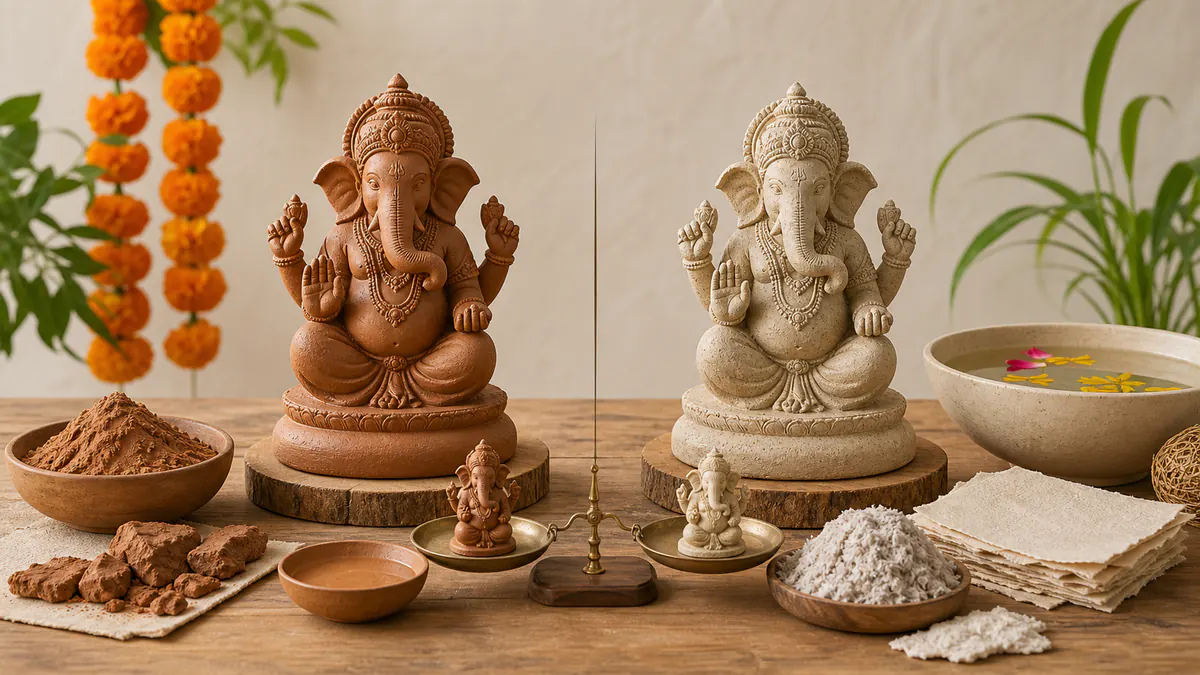
An honest comparison of weight, cost and how fast each dissolves.
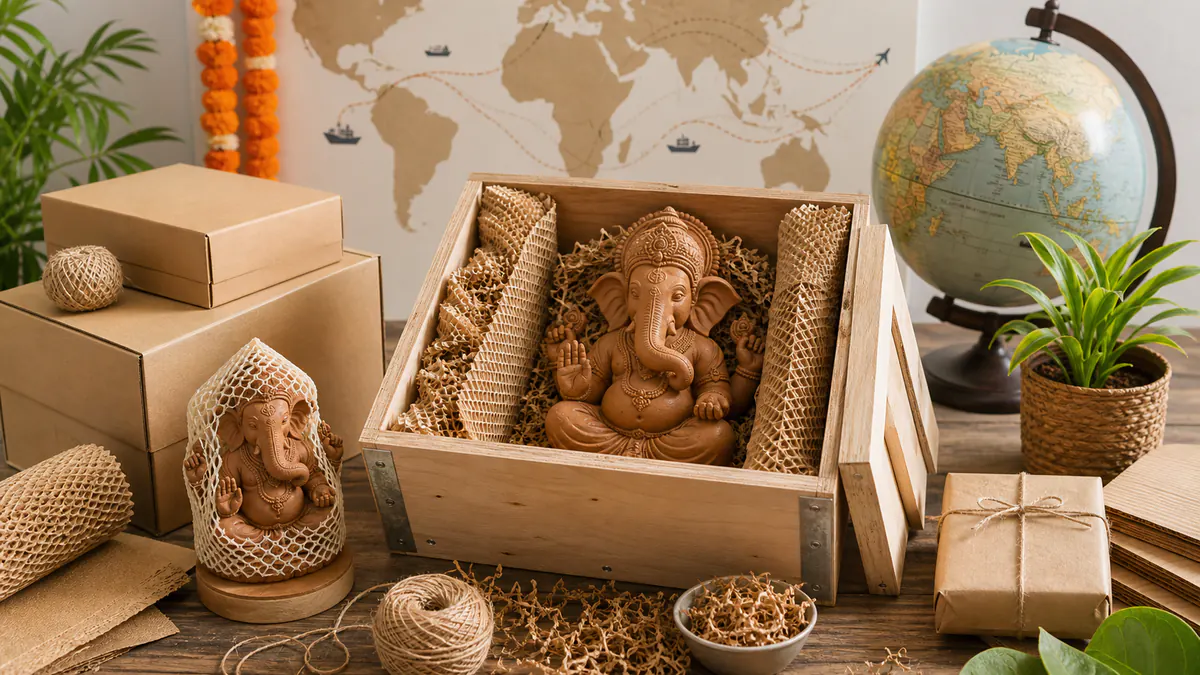
Licences, fumigated crating and air-vs-sea freight for B2B buyers.